A medal, a Moment, a message - the Refugee Paralympic Team in Paris
Reflections on a moment that captured what sport can achieve as a platform for inclusion, participation and social change.
By Nick Sore
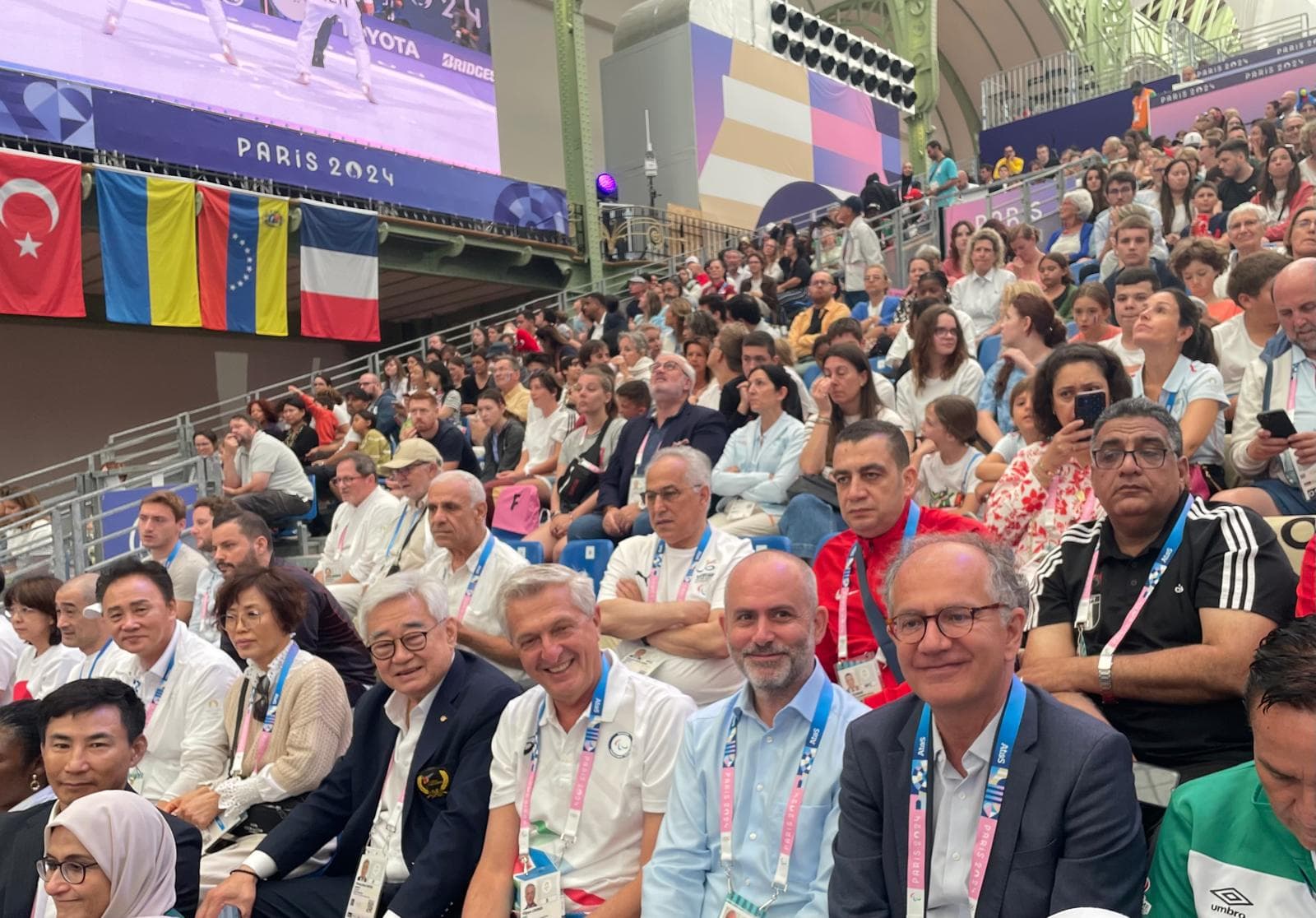
The Paris 2024 Paralympic Games delivered many unforgettable moments, but one day at the Para-Taekwondo competition stands out in particular.
I had spent the day with the IPC and World Taekwondo leadership, watching athletes whose journeys embodied many of the values that make sport such a powerful force for development - resilience, opportunity, inclusion and human potential.
Among them was the exceptional Zakia Khudadadi whose achievement of the first medal for a refugee Paralympian was remarkable in its own right. Yet what struck me most was how her success reflected something larger than an individual sporting result. It demonstrated the transformative impact that sport can have for people who face significant barriers and adversity.
Around the world, millions of young people are excluded from opportunities to participate, compete and develop through sport. The journey that brought Zakia to a Paralympic podium is a reminder of what becomes possible when those barriers are removed and talent is given the chance to flourish.
The social development side of the sports world - sport for development - often speaks about creating pathways. Pathways to participation, pathways to education, pathways to leadership and pathways to achievement. Watching Zakia compete in Paris felt like seeing the culmination of those pathways in action.
What made the occasion even more memorable was the medal ceremony that followed.
Rather than presenting the medal himself, IPC President Andrew Parsons invited UN High Commissioner for Refugees Filippo Grandi to award the medal.
It was a simple gesture, but a meaningful one.
For me, it reflected a growing recognition that sport does not operate in isolation. The greatest challenges and opportunities facing society increasingly require collaboration across sectors, bringing together sporting organisations, governments, civil society and international institutions around shared goals
As someone who has spent many years working at the intersection of sport and social development, I found the moment especially powerful because it highlighted how far the sector has evolved. The conversation is no longer about whether sport can contribute to development outcomes. The evidence is increasingly clear that it can. The challenge now is scaling those opportunities so that more young people can access them.
Paris showcased sport at its very best: not only as a spectacle, but as a catalyst for human development.
Zakia's medal will rightly be remembered as a sporting achievement. Yet the broader legacy lies in what it represents, the ability of sport to unlock potential, build bridges between sectors, and create opportunities for individuals to achieve things that once seemed out of reach.
Sometimes a medal ceremony is about much more than a medal, on this occasion it served as a reminder of why we invest in sport in the first place.