Football for Protection: building belonging through the Global Game
Building Futures Through Football During a Mission to Malawi with FIFA Foundation
By Nick Sore
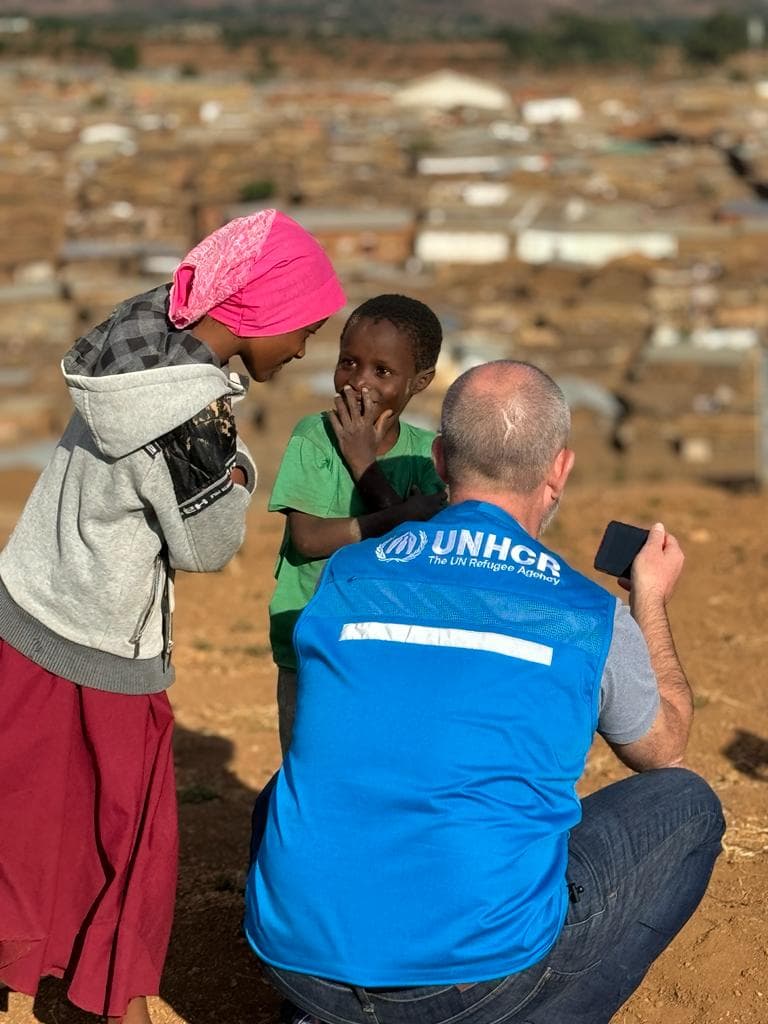
When travelling to Malawi with the FIFA Foundation, our objective extended far beyond football. We were there to explore how sport infrastructure and FIFA D-Licence coach education could serve as powerful tools for refugee inclusion, skills development and community cohesion in Dowa District.
Home to one of the largest refugee populations in southern Africa, Dowa District presented both significant challenges and remarkable opportunities. While many refugees faced barriers to employment, education and social integration, football remained a universal language, capable of bringing people together across cultures, backgrounds and experiences.
Working closely with the Ministry of Sport, the Dowa District Commissioner, UNHCR and partners including Plan Malawi, we sought to demonstrate a broader vision for sport. Rather than viewing football solely as recreation, we framed it as a holistic social and economic development intervention, one capable of creating opportunities for learning, leadership, inclusion and livelihoods.
Over the course of the mission, discussions with government officials, humanitarian actors, community leaders and refugees revealed a shared belief in the potential of sport to strengthen both refugee and host communities. We explored how improved football facilities could create safe and inclusive spaces for young people, while FIFA D-Licence coaching programmes could equip refugees and host community members with recognised qualifications, practical skills and pathways to leadership.
Particularly inspiring were conversations with young female and male coaches and community volunteers who saw football as more than a game. For them, coaching represented an opportunity to contribute to their communities, mentor young people and build a sense of purpose and belonging. The prospect of obtaining a FIFA-recognised coaching qualification offered not only technical knowledge but also confidence, credibility and a renewed sense of possibility.
These early engagements were instrumental in helping FIFA Foundation better understand the realities and aspirations of refugee communities. The mission painted a vivid picture of both the needs on the ground and the transformative role that well-designed sport initiatives could play. It laid the foundation for ongoing conversations about a comprehensive approach to refugee and host community development through football.
What emerged was a vision in which football infrastructure, coach education, youth development and community participation were interconnected components of a broader strategy for inclusion. In this vision, sport became a platform through which refugees could build skills, strengthen relationships with host communities and participate more fully in local social and economic life.
The mission to Malawi was one of several early efforts that helped shape the growing collaboration between UNHCR and FIFA Foundation. Since those initial discussions in Southern Africa, community development and coach education programmes have been delivered in four countries, including Malawi, Morocco, Azerbaijan and Poland. Across these diverse contexts, football has consistently demonstrated its capacity to create opportunities, foster resilience and bring communities together.
Looking back, the lasting impact of the mission was not found in a single training session or meeting room discussion. It was in the shared recognition that sport, when intentionally designed and supported, can become a powerful catalyst for inclusion and development. In Malawi, football offered more than a pitch to play on. It offered a pathway towards belonging, empowerment and hope for the future.
"A football pitch can be much more than a place to play. It can be a classroom, a community centre and a bridge between people from different backgrounds. In Malawi, we saw how football could help refugees and host communities learn, grow and thrive together."